
Spotlight: Ingrid Keller, Artistic Director of The Belvedere Series

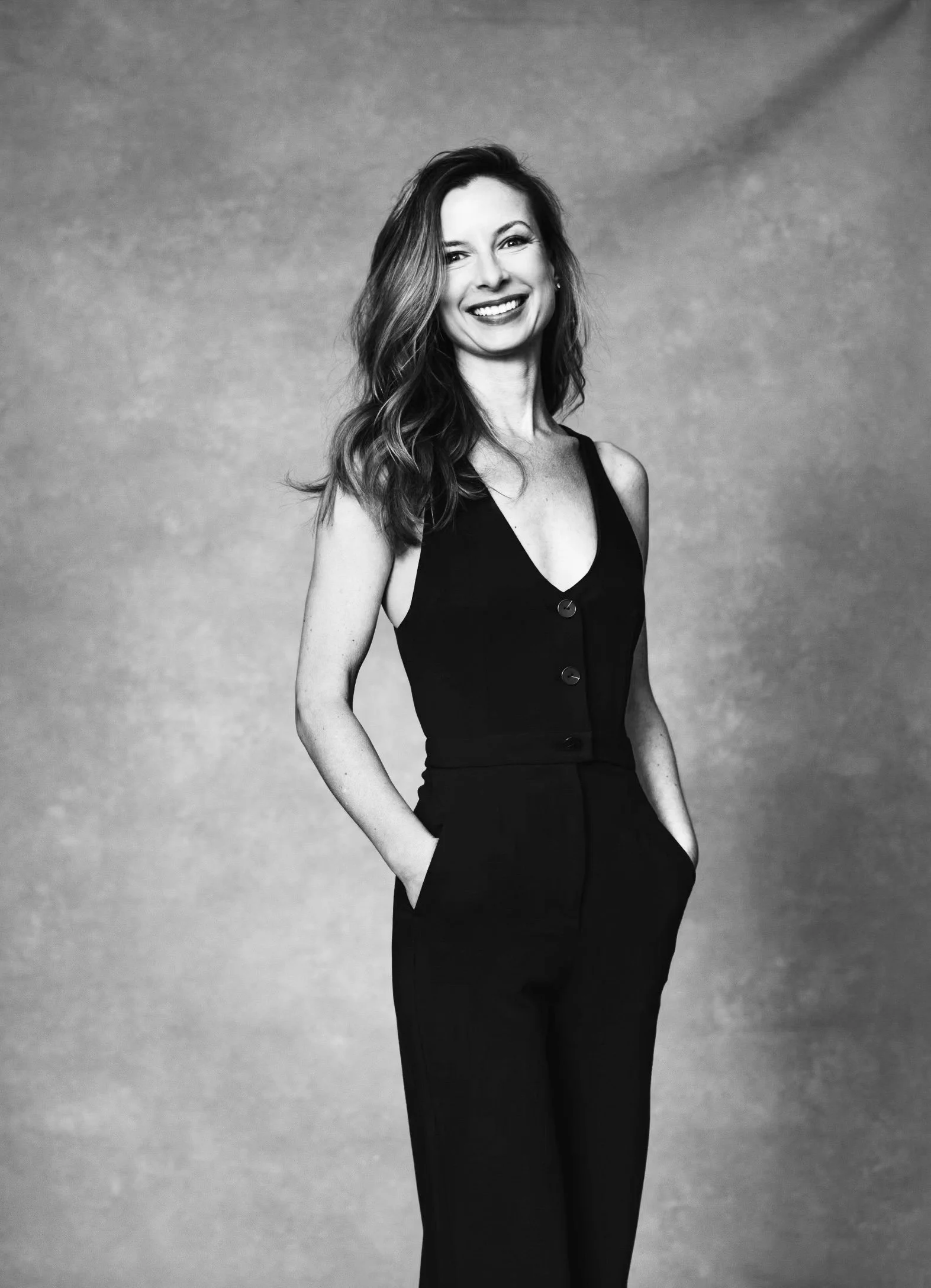
Ingrid Keller, Artistic Director of The Belvedere Series, Photo - Fay Fox
Ingrid Keller is the Artistic Director of The Belvedere Series, a Richmond area series of chamber music concerts. She is also an accomplished classical pianist and mother. We talked to her about life as an artist and the Belvedere Series.
CULTUREWORKS: Before we get into the Belvedere Series, tell us about yourself as an artist.
Ingrid: Music has always been a huge part of my life. I started playing piano at age three with Suzuki, which isn't really the normal course for piano, it's more for strings. But my mother is of German descent, and music was always really important to her. She grew up spending summers in Vienna, falling in love with opera. There was always classical music on at dinner, and on Saturdays my dad would have the Met broadcast playing while he worked from his basement. Music was just a huge part of our home.
My mom was really instrumental in that. She sat with me and my brother, who’s two years older, every day for thirty minutes to an hour of practice from age three. We had great teachers who guided us, and when we reached the limits of what they could teach us, they sent us on to someone new. We ended up at the New England Conservatory preparatory school in Boston. I grew up outside of Boston. I found a wonderful teacher there who really believed in me and started assigning pieces that inspired me as an 11-year-old. I started doing competitions and entered my first international competition in middle school, around 11 or 12.
I spent every Saturday at music school doing choir, music theory, group seminars with other pianists, learning how to talk about music. Amazing artists came to us. It was a really wonderful secondary education.
When it came time for college, I was drawn to the idea of a broader experience. I'd been so focused on music, and I wanted to go somewhere with a great music school but also where I could take German, philosophy, religion. I ended up at Northwestern, and it was really the right place for me. So many serious musicians go straight into conservatory, but being around people who weren't musicians and learning to socialize and connect with them shaped a lot of what I'm doing now.
Two years in, I decided music would be my career and started focusing harder my junior and senior years, knowing I wanted graduate school. I went to Indiana University because of a teacher: Menahem Pressler, the pianist of the Beaux Arts Trio, the definitive piano trio from 1955 until their final concert in 2010. He was transformative as a mentor. The meaning he brought to every single note was really special. I earned my master's and doctorate there.
After that, I taught adjunct while living in Cincinnati, then had a tenure-track position at Northern Kentucky University. Cincinnati was a wonderful place. I was freelancing, coming into my own as a musician and teacher. I've always loved playing for singers and vocalists. But life takes you in different directions. My husband and I got married in Cincinnati, and when he got a wonderful job in Oregon, we moved, I started raising a family, and things took a pause.
Eventually we moved to Richmond. Slowly I started getting back into playing and figuring out what I wanted. I joined the Richmond Symphony Chorus as their repetiteur and accompanist, played some chamber music around the city, and started meeting people. It's hard being a new musician in a new city, but that was really instrumental in getting me rooted here.
I define myself as a pianist, and now as an artistic director and a mother.
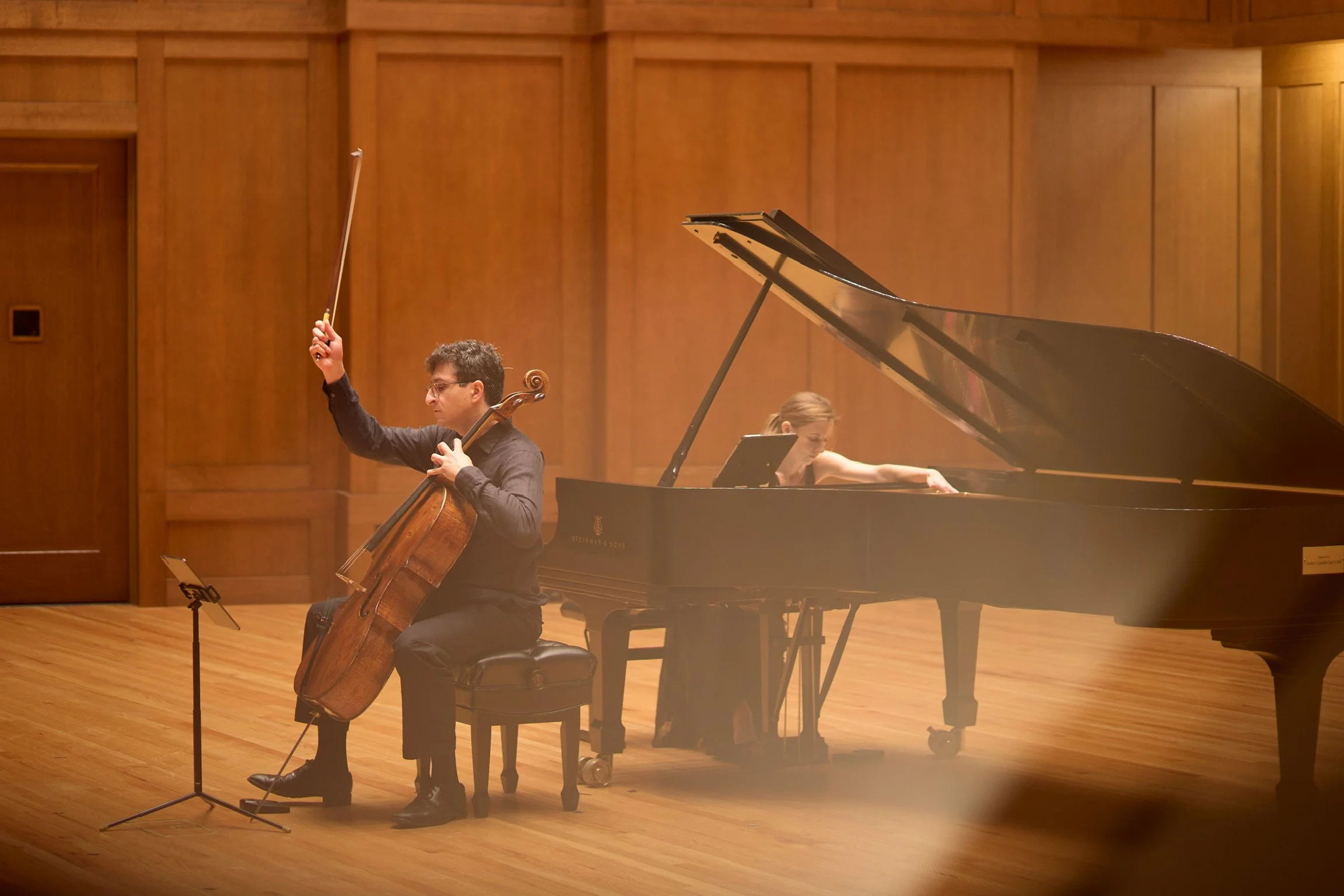
Joshua Halpern, cello and Ingrid Keller, piano September 21, 2025 Louis F Ryan Recital Hall Season Opener, Photo - Ross Gerhold
CULTUREWORKS: For someone unfamiliar with the Belvedere Series, can you describe it and the mission?
Ingrid: The idea actually goes back to when we lived in Cincinnati. We had a cool loft in Over-the-Rhine — exposed brick, 18-foot ceilings, very bohemian. We hosted a house concert there with musicians from CCM, the conservatory, and put on a little Bach cantata and some Mahler songs. People were on the couch with snacks and wine, professors were there — it was really a special feeling. That planted the seed that concerts could be something different from what we typically think of as classical music.
The real turning point came in 2019. I was playing concerts with a cellist I love, and one of them was at a university recital hall. I had this strange feeling — a deep disconnect between how much we loved the music and the composers and why we'd chosen this life, and then the experience of just walking out on stage, playing for 75 minutes, and leaving. I thought: this is not how I want to play concerts. There has to be a different way.
So during COVID, over about 18 months, I designed the Belvedere Series. The question I kept coming back to was why. If you can't answer that, none of it is worth your while. I wanted to be artistically fulfilled myself, and I wanted to communicate the "why" of chamber music to people who might be interested in the arts but don't speak that language.
Our mission is to provide extraordinary chamber music experiences for new audiences and devoted music lovers in Richmond, Virginia.
From the beginning, I wanted a very high caliber of musician and, knowing what it feels like to be a gig musician, I wanted everyone who came to Belvedere to feel valued. Almost like a retreat: well-fed, well cared for, and well paid. For the first few years I didn't pay myself. I wanted the bulk of our funds to go to artist fees.
For audiences, I want them to come and feel like something out of the ordinary is happening — not just because they're hearing a great Beethoven trio, but because the musicians feel extraordinary being on stage, because the venues are so small and intimate that there's a palpable energy that can't be replicated anywhere else.
And the new audience part matters deeply to me. My husband and I are here to stay in Richmond, and I want to introduce this to as many people as possible. Whether they come once and remember it forever, or once a year, or eventually engage with our festival.
At our core, we present concerts in unconventional spaces. The heart of the series is a historic home near Maymont, actually predating it, built in 1889 that seats 50 people. We do two concerts per weekend. It's a little more formal than Schubert playing piano for his friends late into the night, but the feeling is similar: you're just part of it, and something great is happening in this space.
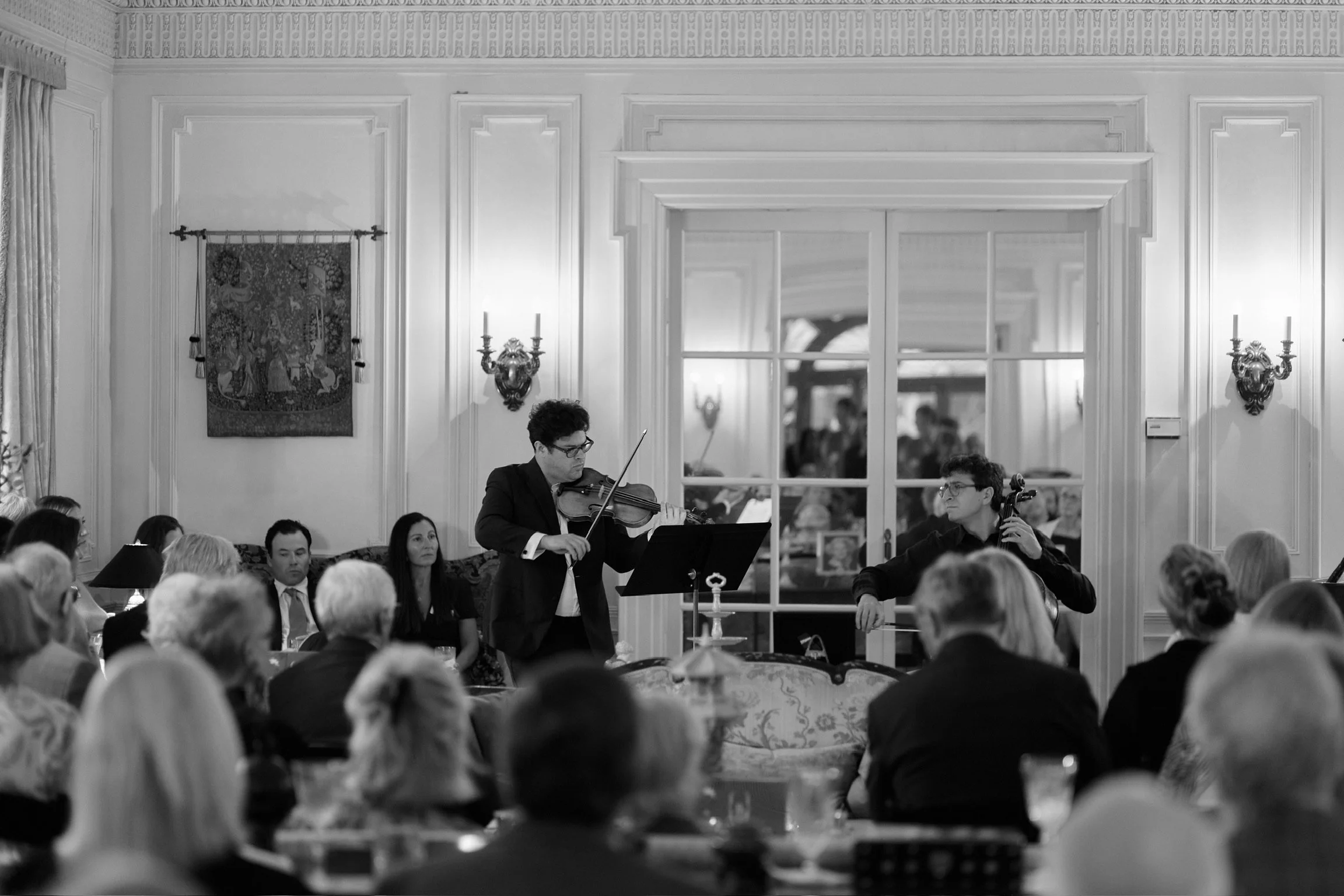
Domenic Salerni, violin and Joshua Halpern, cello September 6, 2025 Annual Gala, Photo - Ross Gerhold
CULTUREWORKS: How do you select locations for concerts and why is location so important?
Ingrid: The experience starts before you even walk through the door — the same way a great restaurant does. Can you find parking? How are you greeted? Does someone notice you're new and reach out? That community and social dimension is really important.
Then, acoustics are paramount. If a venue doesn't have a good acoustic, I'm probably not going to consider it. Ryan Recital Hall, where we do the bookends of our season, is a special acoustic — a little large for chamber music, but we're ending this season with a nonet, nine performers, and it's a lovely space. St. Stephen's Church is neither too boomy nor too dry. It’s wonderful.
As we move toward the festival, we're also thinking about collaborating with businesses around the city: restaurants, the Wilton House Museum, the JCC, hopefully Reveler in Carytown for a jazz cabaret. Acoustics are still the top priority, but there are a lot of factors.
CULTUREWORKS: What is your favorite concert in the series thus far (besides your own)?
Ingrid: I can't pick a single favorite. They’re all so different. What I love is how surprising the audience's reactions can be. I'll sometimes think a program isn't quite landing, and someone will come up afterward and say it was their favorite yet. It's like receiving a text message: depending on where you are in your day, it hits differently. You're meeting everyone wherever they are, and you hope they can show up with open minds and open hearts.
Artistically, for me personally, the Roaring Twenties program a couple of years ago was really special — we played a piece by Erich Korngold with the Fauré Trio, and that program was something else. I also found the recent concert with Owls really moving. Great turnout at St. Stephen's, wonderful people — when all of those things come together, it makes all the relentless work feel worthwhile.
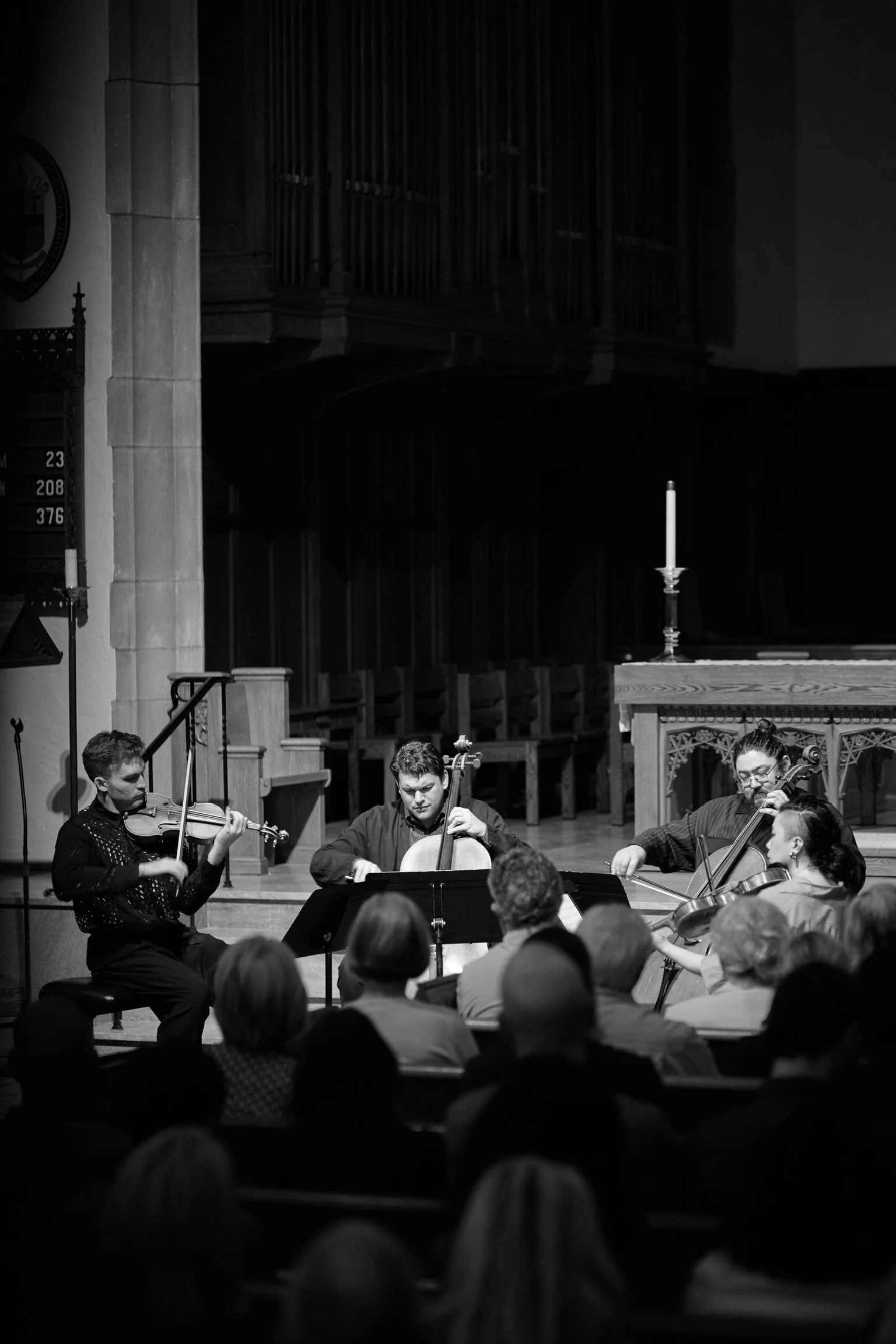
OWLS Quartet at St. Stephen’s Episcopal Church Photo - Ross Gerhold
CULTUREWORKS: Your website reads, "Our events facilitate artistic and social engagement, building lasting connections between artists, listeners, and the wider community."? Can you expound on that?
Ingrid: We have returning artists who've become part of the family. And the Belvedere family isn't just me, my husband, and the staff — it's the musicians. They're treated like family. We have community members who host artists in their homes, and we host special events and dinners where musicians and patrons mix together, because I want people to know it's not just administration and ticket buyers. It's a web of connection, and I think that's a big part of why we've been successful.
Chamber music is small by design, but it's also portable — it's much easier to move a trio than a symphony orchestra. I'm hoping this expansion into the wider Richmond community is something we continue to build.
CULTUREWORKS: As artistic director, what has been most rewarding about this series? And the most challenging?
Ingrid: The most rewarding thing is that people care. When I launched the series — two years of work before the first concert, mailing postcards, building the website — the fact that people actually bought tickets was surprising and wonderful. And some of those early attendees are still subscribers today. We have diehards, a real community, and people who come to every concert. That's amazing to me.
I also put a lot of research into curating programs, not just checking boxes — Bach, Mozart, Beethoven — but thinking about what other organizations are doing and how the landscape of classical music is evolving. It is not a dying art form. We've already commissioned five new works. People are ready to care about this and invest in it emotionally. I had someone recently send a thank-you card saying Belvedere is "one of the things in my life worth living." That's pretty remarkable.
The most challenging part is the relentlessness of running a nonprofit — particularly not having as much support from larger institutions as I'd like. And just the nature of entrepreneurship: figuring out what works, learning to shift and adapt, accepting that nothing goes the way you planned. That mindset is actually helpful to keep in the back of your mind. But the rewards far outweigh the challenges — and when that stops being true, I'll stop doing this.
CULTUREWORKS: How do you engage people "not interested" in chamber music?
Ingrid: I think about this constantly. The series is in a unique position because we can wrap the music in a fuller experience. Last fall we had a wine curator and a chef on the same night for an all-Spanish evening, and we attracted a lot of people who weren't coming for the music at all — they came for the food, the wine, the social aspect. I think that's the only way in.
I've been thinking about the candlelight concert series and why they're so successful: they create a beautiful aesthetic experience that feels different from anything you'd get at the symphony or opera. A unique space, a little food and wine — it doesn't hurt.
I also want it to be a place for families. We offer free student tickets and try to make it as accessible as possible, especially in our larger venues where families have more room and can step out if they need to. For the festival, we're hoping to do a fun event at a brewery.
The bottom line: I guarantee that any first-timer who shows up unsure will think it's incredible. I will refund their money if they don't love it.
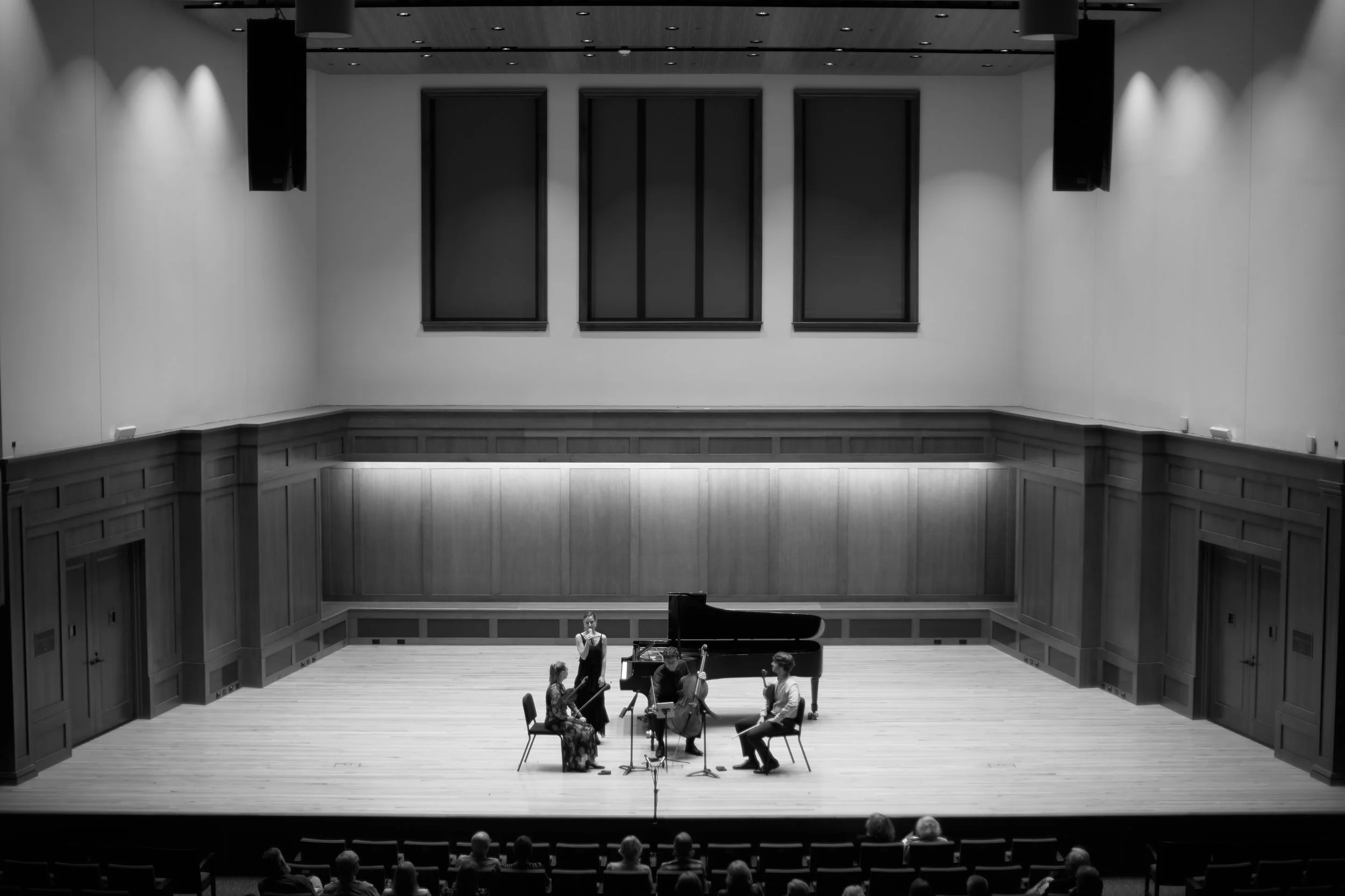
Season Opener, Ryan Recital Hall September 21, 2025, Photo - Ross Gerhold
CULTUREWORKS: Is there anything new and exciting planned for the Belvedere Series next season?
Ingrid: So many things. That’s kind of our M.O.
Our season opener is September 20th, 2026 — our fifth season. We're premiering a commissioned string quartet by Damien Geter, a Richmond-area composer and singer who wrote Loving V. Virginia, which Virginia Opera premiered last season. He's an incredible human being, and his piece, a reconstruction, will premiere at the Civil War Museum, which will be open that evening. You don't often get to attend a concert and then experience a museum, but it fits the city and the programming beautifully.
We'll also have the Merz Trio doing a Brahms and Schumann program; Gabe Cabezas, one of the cellists from Owls, performing a cello-piano program with me; and in February, the Dumky Trio playing Dvořák — a piece we did in our second season, and one I don't think you can hear too many times.
The big milestone is 2027: our first festival. It will be an eight-day chamber music celebration across the city — different venues, museums, bars, restaurants, and the Marburg House. Events will include a coffee-and-pastries concert, a wine-and-cheese concert, and a lot of programmatic ideas designed to be appealing and welcoming. I have my work cut out for me in the next six months, but I'm excited.
For more information about The Belvedere Series and upcoming concerts, click here.
All images courtesy of Ingrid Keller/The Belvedere Series.
This interview was transcribed from an audio recording and cleaned using Claude AI.
Ingrid Keller, Artistic Director of The Belvedere Series, Photo - Fay Fox